

I’ve been reading books about Las Vegas for a long time. I’ve always loved Vegas history—the mob years, the people who built the Strip, and how a city in the middle of the desert somehow turned into this giant machine designed to separate people like me from their money.
The gambling books came a little later.
Once I started gambling more seriously, I started wondering: How are people actually beating these places?
That led me down the rabbit hole of blackjack strategy, card counting, casino comps, advantage play, and basically anything that could teach me how the casino works from the other side of the table.
I own physical copies of all five books on this list. I also own the audiobooks of Comp City, Burning the Tables in Las Vegas, and Casino. These aren’t necessarily the five greatest gambling books ever written. They’re my five favorites—the ones I enjoyed the most, learned the most from, or still use ideas from today.
And before anyone thinks reading five gambling books suddenly turns you into some unbeatable casino mastermind, here’s probably the most important thing I’ve learned:
If you know how to play the game, you might not win—but you can lose a hell of a lot slower.
Table of Contents
1. Comp City — Max Rubin
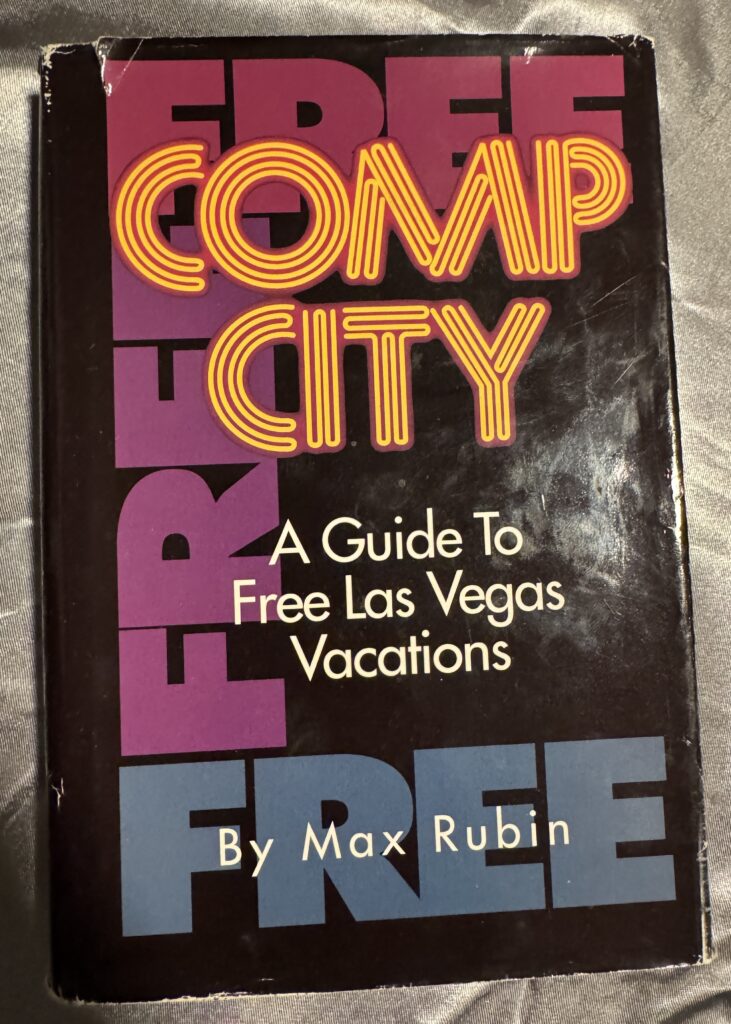
If I could only recommend one book based on how much it personally changed the way I gamble, it would be Comp City.
I first heard about it years ago. All I really knew was that some guy had written a book about how to get more casino comps. I thought that sounded interesting, but I didn’t actually sit down and read it until I started planning Vegas trips and realized something important:
My gambling at MGM properties in Detroit could get me comped rooms in Las Vegas.
Now you had my attention.
Comp City taught me to look at casino gambling completely differently. Before reading it, I mostly thought of comps as something the casino decided to give you. You gambled, they tracked you, and eventually maybe something free showed up.
The book made me realize there’s a lot more to it.
It taught me about making your play look stronger without necessarily putting significantly more money at risk. Things like playing basic strategy, slowing down the game, understanding how your play is being rated, and making sure the floor is around when you’re raising your bets.
Most importantly, it taught me to actually pay attention to my comps and ask for things.
That sounds incredibly simple, but a lot of gamblers don’t do it. If I’ve given a casino legitimate play, I’m not afraid to ask whether they can do something for me.
Worst they can say is no.
Obviously, Comp City was written for a different era of Las Vegas. You can’t pick it up today and assume every single tactic works exactly the same way. Players clubs have changed. Technology has changed. Casino rating systems have changed.
But the underlying ideas haven’t.
You just have to understand how those ideas apply to today’s casinos.
No gambling book has affected the way I actually gamble more than Comp City. I’ve gotten real value out of what I learned from it, and that’s why it’s easily my number one.
2. Burning the Tables in Las Vegas — Ian Andersen

I first heard about Burning the Tables in Las Vegas through Blackjack Apprenticeship, which is one of the better-known resources for learning card counting and serious blackjack strategy.
By that point, I was already interested in blackjack strategy and everything I’d learned from Comp City, so a book about serious blackjack players trying to beat casinos was an easy sell.
I’m not a card counter, so I didn’t read this thinking I was going to memorize everything, throw on a disguise and start getting backed off from blackjack tables across the country.
What it did was give me a much better understanding of how smart blackjack is actually played.
It helped me understand card counting better, how advantage players think, and why certain decisions that might look strange to a casual gambler actually make sense.
There’s a lot about camouflage and avoiding detection when you’re counting cards. That’s obviously less useful to me because I don’t count, but I still found the stories fascinating.
That’s probably the biggest reason I rank this book so highly.
I was learning without feeling like I was studying.
Some gambling strategy books can start feeling like textbooks pretty quickly. Burning the Tables was different. I could actually enjoy reading it while picking up information that made me understand blackjack better.
In fact, if someone told me they’d never read a gambling book before and wanted one place to start, I might actually recommend this before Comp City.
It’s just an easier read.
3. Casino — Nicholas Pileggi

Casino is a little different from the first two books because I didn’t read it to become a better gambler.
I read it because I love Las Vegas history—and Casino is my favorite movie of all time.
I’ve talked before about why Casino sits at the top of my list of favorite Las Vegas movies, and reading the book only made me appreciate the story even more.
I had seen the movie plenty of times before finally reading the book years later. What I wanted wasn’t another version of the movie. I wanted to know what actually happened.
That’s where the book delivered.
You get the real names, the actual sequence of events, and a much clearer picture of the people and events that inspired the movie.
The two people I was most interested in were Frank “Lefty” Rosenthal and Tony Spilotro. If you’ve only seen the movie, you already know versions of their stories. The book lets you dig into the reality behind those characters without everything having to fit neatly into a Hollywood movie.
I already knew the movie was based on real events, so that part wasn’t some giant revelation for me. I just loved being able to separate what really happened from what was changed, combined, or rearranged for the film.
If you’re interested in the mob era of Las Vegas, this is essential reading.
And if you love the movie Casino, I think you’ll appreciate it even more after reading the book.
4. Winner Takes All — Christina Binkley

Everybody talks about mob Vegas.
I’m fascinated by that era too, but there’s another period of Las Vegas history that I think is just as important if you want to understand the city we have today.
That’s the era covered in Winner Takes All.
I was already interested in Steve Wynn before reading the book, but what fascinated me was the competition between Wynn and Kirk Kerkorian and the race to build the Las Vegas Strip into what we recognize today.
The story that stuck with me most was Wynn building the Mirage and then eventually moving on to build Bellagio.
Think about what those properties represented.
Vegas was changing.
The mob era was ending. The giant themed resorts and megaresorts were taking over. The Strip was becoming something completely different, and guys like Wynn and Kerkorian were fighting over what the next version of Las Vegas was going to look like.
I still prefer reading about gambling itself, but Winner Takes All fills an important gap in Vegas history for me.
We hear endless stories about mobsters running casinos, and we know what the Strip looks like today. This book helps explain how we got from one to the other.
If you’re a Vegas history nerd, especially if you’re interested in the rise of modern Las Vegas, this one belongs on your shelf.
5. The World’s Greatest Blackjack Book — Lance Humble and Carl Cooper

I basically stumbled across The World’s Greatest Blackjack Book while looking around Amazon after I’d already started taking blackjack more seriously.
Unlike Burning the Tables, this one is much more straightforward and instructional.
That’s part of why I like it.
One idea that stuck with me was building relationships for future comps. If you’re demonstrating consistent play over multiple sessions, establish that relationship and then talk to the casino about things like dining or entertainment comps.
Again: ask.
Gamblers will sit at a table putting hundreds or thousands of dollars through a casino and then act like they’re embarrassed to ask whether somebody can take care of dinner.
Why?
Between The World’s Greatest Blackjack Book, Comp City, and Burning the Tables, there are things I learned that I still use today.
Like Comp City, some of the specifics need to be viewed through a modern lens. Casinos have changed. The games have changed. The way they track players has definitely changed.
The ideas are still valuable.
This book barely made the list because I seriously considered Beat the Dealer and Fear and Loathing in Las Vegas for the fifth spot.
I ultimately chose The World’s Greatest Blackjack Book because it feels almost like a combination of Comp City and Beat the Dealer. You get the blackjack side, but you also get some of that bigger-picture thinking about playing against the casino.
If your goal is to understand how to beat the casino—or at least give yourself a better chance of surviving it—this is worth reading.
If you want the practical version of the blackjack strategy side, I also put together my perfect blackjack strategy guide with the plays I actually use at the table.
Honorable Mentions
Leaving these three off wasn’t easy.
Beat the Dealer — Edward O. Thorp is a classic for a reason. If you’re interested in the history and mathematics of beating blackjack, you should read it.
Fear and Loathing in Las Vegas — Hunter S. Thompson isn’t a blackjack strategy book or a guide to casino comps. It’s just one of those books that belongs in the conversation whenever you’re talking about essential Vegas reading.
The 21st-Century Card Counter — Colin Jones is another great blackjack book, especially for anyone interested in how modern card counters actually approach the game.
All three could have made this list. I just only gave myself five spots.
What Gambling Books Actually Taught Me
I read Vegas history because I love Vegas.
I started reading gambling books because I wanted to know how people were actually beating the casino.
And yes, some of what I’ve learned—especially from Comp City—has genuinely saved or made me money.
But I think there’s a danger in reading a few strategy books and suddenly believing you’ve cracked gambling.
If you’re dumb about it, learning a little bit can probably make gambling even more dangerous. You start thinking you know something the casino doesn’t and suddenly you’re bulletproof.
You’re not.
Knowing how casinos work doesn’t mean I always make the right decision either—I’ve written about plenty of Las Vegas mistakes I keep making, even when I know better.
The biggest lesson I’ve taken from all these books is much less exciting:
Learn how to play the game correctly and you’ll lose a lot slower.
And learn how the casino works.
Understand basic strategy. Understand the house edge. Understand why the casino gives you free rooms. Understand how your play is rated. Understand that a “free” steak isn’t really free.
Then, when you’ve given a casino legitimate play and you want something?
Ask.
A room. Dinner. Tickets. Whatever.
The worst they can say is no.
And if you’re looking for your first gambling book, I’d start with Burning the Tables in Las Vegas. It’s interesting enough to keep you reading while still teaching you something.
But if you want the book that changed the way I gamble?
That’s Comp City.
Not even close.
And if you need proof that knowing the right play doesn’t guarantee a winning night, I once played perfect blackjack and lost $700 before dinner.
FAQ
What is the best gambling book for beginners?
I’d start with Burning the Tables in Las Vegas by Ian Andersen. It teaches you a lot about blackjack, card counting, and how serious players approach casinos, but it’s entertaining enough that it never feels like you’re reading a textbook.
What is the best book about casino comps?
Comp City by Max Rubin is my favorite. Some of the specifics were written for an older version of Las Vegas, but the basic ideas about understanding your casino rating, maximizing your play, and actually asking for comps still apply today.
What is the best blackjack book to start with?
For pure instruction, The World’s Greatest Blackjack Book is a great place to start. If you want something that mixes blackjack knowledge with entertaining stories, I’d go with Burning the Tables in Las Vegas.
Is Casino by Nicholas Pileggi based on a true story?
Yes. Casino tells the real story behind the Las Vegas events and people that inspired the movie. One of the reasons I enjoyed the book so much was getting the real names and actual order of events instead of just the Hollywood version.